Friday, 22 January 2010

Mary Quant Mini-dress: object analysis presentation notes and pictures


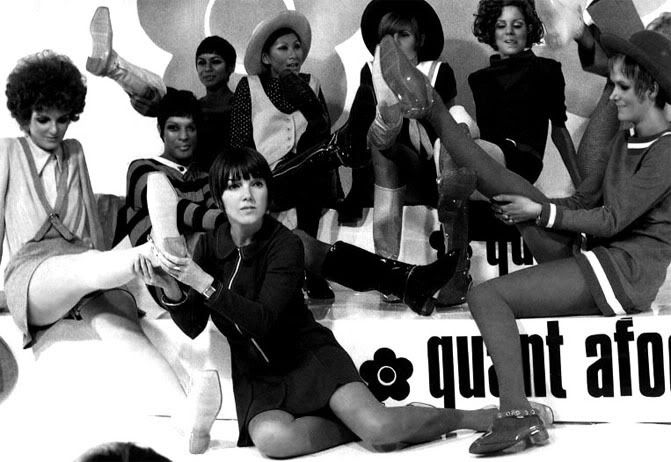
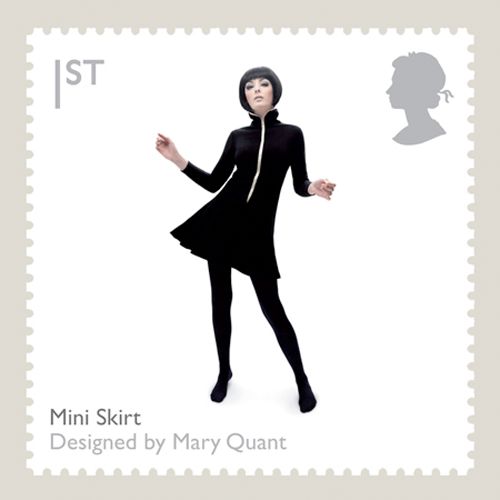
What? The mini-dress by Mary Quant ( black and white mini-dress, bonded wool and nylon hersey. White buttons at the front and white stitched lines at the bottom -Victoria and Albert Museum 1967)
the context:
  • 1960s
  • a generation born after WW II in desperate need of change
  • drab and dutiful fifties VS. Swinging sixties
  • first teenagers
  • play with convention against the established
  • the Mods and ever changing fashion
Why?
  • interested in the link between fashion and society
  • need to learn more about fashion era, and what they represented on a wider scale
  • 1960s in particular, as many think that has happened are still "alive" now
Concept, ideas
  • mini-dress, so more of a women point of view of the 1960s
  • like between the social changes and fashion changes
  • the mini- skirt says a lot about the decade, what other symbols?
Methods of research
  • Videos
  • Internet
  • Books
  • Awareness
  • Key Text: Swinging sixties: Fashion in London and beyond 1955-1970

Designers, Artists, Books
  • Mary Quant
  • John Stephen
  • Twiggy
  • The Beatles, The Who
  • Exhibition: Carnaby Street 50th Birthday, Pictures of Philip Townsend


Some pictures related to my object analysis
First step of my research... looked at website, videos and images
and wrote rough notes and now I need to leave it so it can grow on me...
Felling happy about my choice


Friday, 15 January 2010

Visit To Blythe House

Blythe House is part of the Victoria and Albert Museum and contains archives of artists and companies in decorative arts (not only textiles).
The archives are mainly British based and from the 20's century. they are to be found on the national art line catalog on the V&A website, with all the description needed.

I took some notes of what I liked or what caught my attention and made me want to come back or research further on.
On the first spot, the exposed archives were from Heal a company founded in 1810 whose head quarters were in Tottenham Court Road. there were pretty popular.
The second spot was Ambassador Magasine it is a textiles magasine founded in 1933 it was edited first in Amsterdam and then London (due to 2ND World War, Amsterdam and London editors lost contact and once the war finished London editors had continued publishing).
The third one was Presage a fashion and textile forecast magasine published in Paris in 1961.
I really liked that one because of the way the presented the magasine and how it is just full of samples and colours and drawings.I enjoyed looking at the 60's fashion design.
The fourth one is was W.Gordon Hunton who was a calico printer in the 40's and invented this device, glass curved in a way that the drawing would repeat and create a pattern. I admire the drawings a lot because they were simply beautiful made.
The fifth spot was Samuel Courtaulds which was more of a furnishing textile company, it was the 1940's biggest textile manufacturer.
we also had the opportunity to look at Oberkampf samples (1830-1860 -French printed )and as well as Lyon collection of silk (19th century - French) and Morton Sundour textiles sample ( 20th century:20's,30's and 50's) in big, old book that smelt moist.
I took rough notes of the things that caught my attention and that I would like to find out about a bit more:
The company Reichenbach and Co from St-Gall Switzerland
I would like to learn more about Swiss textiles
The colour combination sheet
the way they presented it with an A4 page with lines of coloured circle and over it an A4 page with 5 holes and depending and how the page moves it gives different colour palette (Presage)
W. Gordon Hunton drawing of little characters in a graphic style
I liked the modernity, it is comic book like
Drawing on Frieze paper
Tricel?
I found amazing the quality of the work presented in term of its conservation.

Wednesday, 6 January 2010

Desconocida: Unknown by Lise Bjorne Linnert


This exhibition was on at the Gallery UCA Epsom from February,10th until March, 22nd 2009.

I have read about it in MAGAZINE NAME , it caught my attention because I felt it has a meaning, a message to it.

The Norwegian artist, Lise Bjorne Linnert, research and based her exhibition about the Maquilladoras in Cuidad Juarez in Mexico.

the Maquilladoras job consists in working for Western companies that employs Mexican worker on low wages to do mostly, night shifts. The majority of the workers are women and they are prone to kidnapping, rape and torture.

"It is the cruel picture of the dark side of globalization, corruption and in-balance between the people of power and money and the huge population of poor in desperate need of jobs."


Lise Bjorne Linnert used sound, film and thread to represent this injustice. she created workshops where all the participants create name tags by stitch the victims name on pieces of fabric, some of them called:"unknown" as they are many of them that are not recognized.


MAKE SENSIBLE FABRIC - Ethical Fashion Forum - Lecture

I really liked the lecture on EFF, after learning about all the ethical companies at the forum, I think it was a great complement. The lecturer was great, very motivating and "hope-giving"

the definition of ethical fashion that we were given was: MINIMISES IMPACT ON THE ENVIRONMENT WHILE MAXIMUMS BENEFITS FOR PEOPLE.

The point that I think I will always remember from that lecture is the RRR principle.

Reduce, reuse, recycle
The aims of EFF apply these principles:
  • reduce poverty
  • create sustainable livelihoods
  • reduce environmental impact of the fashion industry
The RRR approach is very interesting as those three actions are easy to apply , even for a student! ( you don't need to be a powerful business woman!)

MAKE SENSIBLE CHOICES
If we all do small changes, it will be a big difference.


The problems:

The world is in deficit- human beings are digging deep in the world resources

1% of the fashion business is ethical fashion

"People are trained by the media to be perfect consumers of mass manufactured rubbish" V.Westwood

What we can do:
Make sensible choices, make sensible fabric

Make ethical fashion look better

Build network
Ask questions


As textile designers we can make a difference our work is limitless.
Our project should have a message, make a little difference not change the whole world!
Our career is difficult as we are required to be creative as well as intelligent! That's a challenge!

Some artists, designers and companies examples:

TERRA PLANA
They aim to minimize waste and toxin use by selling a variety of non generic products supporting ideas of sustainability: lightness, anatomic design, disassembly and durability.
they used mainly eco-friendly materials and stitched construction to minimize the use of glue, the is a recycled element in every product construction.

FROM SOMEWHERE
Orsola de Castro and Filippo Ricci recycle luxury designer pre-consumer waste from 1997.
they use all kind of waste such as proofs, swatches, production off-end cuts and end fashion and textiles surplus.
each piece as its unique side.

(the website is really well made!)

And other names:
Panchachuli's women

Myriam Morgensten

This lecture really talked to me and made me think a lot about where the world is and the difference I want to make!!
TO BE CONTINUED...


Thursday, 10 December 2009

Ethical Fashion Forum - 20th November

MORAL FIBRE VS THE WEST COAST WEAVING ESTABLISHMENT (WESCOTEX)


Local materials and production VS globalised production


Both companies are based in India, they both sell cotton items among others: bed linen , cushion and cotton fabrics.


Moral Fibre offers hand spun and handwoven cotton, dyed with only natural dyes that are harmless to people's health and the environment. They sell fabrics, a feel-well fashion range and a furnishing range.

Some historical facts are interesting to understand the motivation behind Moral Fibre's cause.


In the early 18Th century, India had a very powerful influence in the textiles business, so much that it started to badly affect the British wool and silk imports.

In 1970s, the British, to restore their status, end the concurrence and benefit from the Indian market, instored an import duty on East Indian Fabrics. India lost his place as a supplier to the world of fabrics (...).
America and England became business partners and create the Trading Triangle between the USA, England and Africa. Great fortunes were made for a few, on the backs of the poors.


The textile industry in India did not break down totally and small quantities of textiles were still produced.


Between the 1920s and 1960s, the invention of man made fibres changed everything in the textiles world, cotton was not No 1 anymore. the consummation generation started here and cheap clothes were available to everyone. Behind the label of a cosy fleece lie some uncomfortable truths.

Pesticides and other chemicals to grow cotton have also invaded the textile world, as cotton is prone to insect attacks. The cotton farmers have to handle dangerous chemicals and pesticide which harm their health and damage the land. as well as the pesticides and chemicals issue, genetically modified cotton has appeared on the market It is also a threat for the environment and for the people whose lives depend on the growth and trade of cotton.


In 2007, consumers worldwide spent over US $1 trillion on clothes. Yet the garment industry remains one of the worlds most exploitative sectors, against people and the environment.


Moral Fibre has two aims:
  • to develop environmentally friendly fabrics

  • to make the process of fabric making socio-economically sustainable


Moral Fibre wants ethical clothing; inspired by Mahatma Gandhi and the hand work of many fabric producers in India; Moral fibre provides work and places to live for their workers and hand spun and hand woven fabrics which means it is almost zero carbon foot print.

http://www.moralfibre-fabrics.com/


I chose to compare Moral Fibre to The West coast Weaving Establishment (Wescotex)

As mentioned above, both companies sell similar type of products and are both based in India.

While Moral Fibre principles are all about ethics and sustainability, Wescostex's ones are all about exporting to as many countries as possible and growing bigger!

The company was created almost 100 years ago, in 1916. With its team of more than 2000 employees (nothing about how they are considered, paid or recognised...) it has now obtained the status of Export House recognised by the government of India and have been awarded the Government of India gold medal for excellence in export performance ( fast.. but is it eco-friendly?)

Even though the company claims to use eco-friendly dyeing and azo-free dyestuff, they are proud to promote vibrant hues, weaves and designs.


Even though my opinion can be seen as slightly too subjective, I am not able to see ethics and sustainability as Wescotex values, they might have use some bits of eco-friendly materials but it is clearly not their first aim, their website and company description is all about the prestige, they money and massive production!

I have been charmed by Moral fibre's values for they are very ethical, they see the human being behind the clothes. They care about the planet and the people trying to survive in the material and consummation world we live in. Their aim is undoubtedly to conserve and value the beauty of Indian clothes maker work and help them have a better life out of it.

http://www.wescotex.in/

Friday, 27 November 2009

An artist cannot fail; it is a success to be one.

Textiles Futures Research Group Co-Design

Very hard to understand for me, very fragmented notes but interesting theme.

Jennifer Ballie


"Co- Design is a term that contains participatory design, meta design, social design and other design processes that requires participation"


Different aspects of Co-Design:


  • Design Activism

  • Customise

  • Fashion Systems and Service ( share and play)

  • Fun and functional Fashion Crowd sourcing

  • Crowd sourcing

  • Transformation design( Berber soepboek, assembling pattern)
The reason behind Co-Design:
"Design is only reaching 10% of the population" ( the wealthiest)

Main Message

Human centered design

Hear - Create - Deliver

Customers as co-designers concept

Some interesting co-design work:

Vivienne Westwood, DO IT YOURSELF

http://ethicalstyle.com/2008/10/vivienne-westwood-do-it-yourself/

Hacking Couture


http://hacking-couture.com/


Customers as Co-Designers, a framework for open innovation, Piller F.C. Schaller and D Walcher (2004)