Saturday, 27 November 2010

Vintage


Oxfam, vintage decade guide, fashion loved for longer:

Oxfam: Oxfam open his first shop in 1948 in Oxford, being one of the first charity shop chain, it was founded by a vicar in aid of the Greek civilian war victims.
Oxfam became even better known in the 60s when celebrities believed in what they did and help fund-raise, the Beatles. in the 60s it was apparently very cool to shop for 20s vintage clothes! through all those year it has helped and fight for a lot of causes!

Vintage is and has been a big thing! Charity shops and buying second hands clothes, accessories and objects is very common.
It is as if the vintage etiquette made people want to buy the item!

It is nostalgia, and the quest for a unique look and now has come the notion of recycling the clothes we have instead of buying new ones!

Vivienne Westwood tell shoppers stop buying clothes!


Textile and Literature


A lot of reading!!!!We we read many text with example of descriptions and use of textiles in literature.

  • In the Greek mythology, Penelope weaves a tapestry while her husband is away and she says that only when she finishes it then she we not faithful, she weaves during the day and unpick during the night! by doing that she never finishes it and stay faithful to her husband!
  • Sleeping beauty and the spinning wheel, she hurts herself with it and fall into a deep sleep
  • Lady of Shalott a Victorian ballad by the English poet Alfred, Lord Tennyson (1809–1892), the Lady of Shallot weaves.
  • Emile Zola also used tom describe an atmosphere using a lot of textiles. L'assomoire, the ladies paradise


seminars notes:
Textiles? is seen as inferior on the art scene? is the idea of it being a women's craft influence it status? is it perceived lower?

I love being a textile designer and as a women I think that it might be perceived slightly inferior but it gives me will to be even better!

The sad reality is that women still haven't won the status they deserve! a cook is usually a woman, most woman cook at home but yet that famous chefs are all men! Same with fashion designer, the majority of famous fashion designers are men! There is place for improvement

the other point that was made during the seminars is that textile is still sometimes associated with "a hobby", people don't understand it can be a career!


Back in time textile was as precious as gold, you could pay for something with textile! it was respected but not it lost its presence, it is not even acknowledge sometimes, we forget that textiles are everywhere and that we all use them from the very moment of our birth!

Why has it lost its place? relocation? society of consummation? fast fashion? loss of tradition?


Saturday, 13 November 2010

Textile transformation, shaping the body with cloth.

This lecture was about the way people use and used cloth and textile to reshape their body depending on the fashionable silhouettes of their epoch.

Waist: the waist has always been a big obsession, I feel. it is probably because it is the part of the body that if changed can make you look totally different. the manipulation of the waist dates from the ancient civilisations, the Greek goddess already used clothe to accentuate it. I the 1920's people use to paint over the negatives of the picture to appear with a thinner, slender waist.
In fashion history it is important to know the French designer
Paul Poiret who helped the women liberate from the corset; that was the beginning of the end of the extra thin waist.

Listening to the waist being reshapes to an unnatural look, Barbie come into my mind,
apparently the waist of the doll and her body proportions are unreal.
Men also had the pressure of a perfect body shape and they also use to reshape their waist.


Shoes: the shoes were also used to accentuate the body shape, the poulaines, men's shoes made them appear with extremely long feet.
Another masculine example of body exaggeration, is the zoot suit of the jazz singers and then every body, and xxxxl suits regardless of the man's size. Cab Calloway in a zoot suit

The shoulders: the shoulder pads of the 1980s, accentuated women's shoulder give a message of strength and masculinity, it was a the time women started to fight for their rights! funnily it is coming back not in an imposing way but a decorative one.
It is funny to notice that people that are thin want their body to look curvier and change their bum's shape and the people that are curvy want to look thinner and straighter by using underwear that suck the shape! The grass is always greener on the other side!


seminars notes:

The seminars are so interesting because we can just share our thoughts!
We talked about the morality of fashion today, of the image fashion give women and men of how we should look like, how influenced are we? I believe that we are extremely influenced by fashion trends, it is just everywhere and by being so it becomes natural to us, but without a lower impact on the way we want to be or look!
I personally think that I will never be happy with the way I look but by being able to say so I am suddenly much happier! as long as I am healthy and comfortable in my own skin, then I try not to care to much about the fashion trends that are thrown at us!

We also discussed about the respect of our body, in some cases "shaping the body" has come to an extreme; snake tongue, whole body tattooed and pierced or excessive plastic surgery... It is as if we are and will be eternally unsatisfied with our body, we need to improve upon nature!!!What happened?
And an obvious example is Michael Jackson, an the mystery behind his appearance, what went into his mind, how did he feel about himself, and how his change of colour has always been tabooed, never been deeply looked at!


Tuesday, 2 November 2010

orientalism; the notion of exotic

orientalism:

orient: is a wide group of country
the west conception of the east, the orient.

the west interest in orientalism dates from a long time, some paintings can be very offensive nowadays.
Delacroix - the death of sardanapalus
This image is very strong in the way it shows white men domination, they are shown as strong and very above the others, particularly women in this painting.

Jean- Leon Gerome - the bath

this image shows a black servant bathing a white woman, it is really showing what is was like back then.

Henriette Browne, a women artist, paintings are much less fancy that the ones of men artists, their take on orentalism was less flamboyant.


Importing orientalism, some example:
Turkish textile, 16th-17th century: very luxurious
Italy and Turkey had a very associated with luxury, it was very fashionable to be painted in orientlism dresses.


seminar notes:
The notion of exotic: my personal idea of exotic is warm, sunny, far and very different that what we are used to here.

I was sitting next to a girl that comes from Japan and the conversation came to a ask if the oriental, or the people from places that we, westerner, consider as exotic, consider the West as exotic, and funnily the answer was no. the notion of exotic is rarely associated with the west.


The other direction our discussion took was the cultural habits of a country and if it is dissapearing, by the globalisation, an open-mind that make all culture mix.

Will the tradition and the cultural habits that made a population what it is die, because the customs and skills are not passed on the new generations? If I have to be entirely fair, well, they will probably... but the exciting bit is that as human beings need to identify themselves to some sort or group and community, our traditions and skill and customs will evolve and renew.

I believe that even though the world is a big cultural mix, there isn't a loss of identity as said before, human beings need to feel that they belong somewhere and it is very common that in a continent, countrymen are proud of their nation, in a country, citizens are proud of their regions or cities, in a cities, people are proud of their borough or neighbourhood, and so on... I feel that in this big cultural mix that we live in, our identity is not only preserved but it is stronger than ever.

My personal experience is from the time I came to live in England, I come from Switzerland and while I was living there I never felt very patriotic, it was always a bit silly to love your country so much, but now that I am in surrounded by so many cultures I feel more Swiss than ever, iorientalism: have learnt to love the place where I come from, because if I forget it, I feel that I am losing a part of myself!


culture attitude towards morality and ornament

culture attitude towards morality and ornament:

key text: Loss. A (c1998) ornament and crime pp.29-36
It was in 1908 when he writes, that explains his sometimes very closeminded ideas... very pro educated people and slightly elitist, personally find him a arrogant...

" the evolution if culture is synonymous with the removal of ornament from object of daily use"

less is more, plain and sleek is a sign of good taste and high class;
for cultivated people "ornament does not increase the pleasure of life;
the lack of ornament is a sign of intellectual power, (...) use at its discretion (...)

seminars notes:
the definition of ornament give it a very positive connotation; at the opposite of Adolf Loos idea.
the definition of morality present a choice between the right and wrong.
so basically we discussed what was our opinion on ornament? are we more less is more or more is more? do we feel guilty we we indulge ourself ? buy a pair of shoes that we know we don't really need?

I personally think that a person's reality is always different, depending on where he was born and how he was educated. We are very lucky here in England to have much more that what we need materialistically, but i also think that we cannot feel bad about everything we do or buy; it is like life has given you a bonus and if you don't not try to make the most of it then you didn't deserve your luck, it is very hard to be so critical on ourselves, it hurt to see how spoilt we are and that sometimes we do not make the most of it.

ampoule: Jimi Hendrix music criticised for being over ornamented, now he is a music legend

Monday, 31 May 2010

TED Lecture Impact Lectures 3

The End of the Life Cycle
reuse, recycle, restore

maximum conservation of resources:
  1. avoidance and minimization buy nothing day on 27th November 2010
  2. reuse ebay and charity
  3. recycle repair, refurbish
  4. recovery incineration and composting
  5. disposal
cases studies: ask more about them at the TED department.some are names of things I liked but need to
  • trigema biodegradable cotton T-shirt
  • Korea, use of rice husks to create bricks for houses
  • Slow fashion/ Fast fashion TYVEK
  • grow fabric
  • the un-cooled recycled extrude
  • Holy McQuillan Blog
  • Timorisannen Blog
  • Local wisdom Project, stories of garment

Holly Berry

www.redesign.com
re-think
re-create
re-design
re-educate
recycle


fast fashion: there is no point making textile that will last foreverif we are throwing it away.

the paper dress the invention

Albert Einstein
We can't solve problems by using the same kind of thinking we used when we created them.


TED Lecture Impact Lectures 2


The Middle of the Life Cycle

  • Consumer use, emotionally durable design.
  • Life cycle of a T- shirt:
  • disposable paper dress, great response to through away fashion and over consumption, short life but can be recycled and re designed!
  • replace the need to consume: make emotionally durable design, co-design
  • promoting a cause, choose an issue to battle and promote your concept

artists and books:
Crowd Sourcing; catwalk genius
the uniform project

Katherine May
  • use peoples old clothes to co-design quilts
  • she works with three other designers sharing a studio- bricolage
  • she used her groing up storie, her love with human cointact and interactions in her business, she created emotionally durable quilts
  • Jonathan Chapman writings inspired her in doing something sustainable
  • she got her idea already at university but only collected thing for it, and she looked at her old sketch book for her actual work
  • recycling factory, in Italy she went and get off cuts
  • during one exhibition the bricolage group were knitting and attracted a lot of attention, people want to talk to you when they see you doing something
  • her inspiration: nine lives project and Becky Early, wedding dress project - up cycling


Digital Design:
BonBon Kakku sell your ideas
Spoon Flower design and print your own fabric
  • computer art
  • facilitator
  • digital print as a bespoke
Digital print:
30% less water
45% less electricity
overall dye wastage


Sunday, 30 May 2010

Jean Paul Gaultier Summer 2008 Haute Couture


Examples of macrame and lace , and also because I just love his work.
http://madame.lefigaro.fr/mode/defiles/femmes/9/466-jean-paul-gaultier/collection
more especially slides 11, 22, 25, 30, 34, 38.


Kniting: fashion, craft, art and technology by Sandy Blackk


Even though I have chosen print CAD as my specialization, I really like knit and this lecture was really interesting.

Knit, some aspects:
  • duality, universality
  • 2D and 3D
  • underwear to outwear ( 1st seamless knit: socks and stockings)
  • engineering knit
  • craft and technology
Some examples:

  • first punk knit by Vivienne Westwood
  • hand knitted Jean Paul Gaultier Collection (not found)
  • Julien MacDonald revolutionary hand knit and lace
  • Freddie Robins , the knitted wedding blog and Freddie Robins interview on knitting.

  • Louise Gouldin, very young and refreshing knit
http://www.style.com/fashionshows/review/S2008RTW-LGOLDIN/
  • Sandy Black
Eco-Chic the Fashion Paradox
Knitwear in Fashion
Fashioning Fabric, Contemporary Textiles in Fashion

Chris Ofili at the Tate Britain - Titles

Popcorn Tits
Blind Popcorn
7 bitches tossing their pussies
Before the Divine Dung
Spaces Hit
Blossom
No women, no cry
Afrodizzia
The Adoration of Capitan and the Legend of the Black Star
Foxy Roxy
Pimpin ain't easy
Two Doo Voodoo
The Holy Virgin Mary
She
Prince amongst Thieves
Third Eye Vision
Afro Love and Unity
Afro Sunrise
Triple Beam Dreamer
Afro Daze
Afrovoid
Albinos and Bros with Afros
Afro
Afro nude
The Healer

Thursday, 27 May 2010

TED Lecture Impact Lectures 1

The Beginning of the Life Cycle

"out of all industries, the textile industry is the second more polluting in the world."

The key issues:
  • chemical pollution
  • energy inefficiency
  • unethical production
  • transporation
  • consumer use
  • over consumption and waste ( fast fashion)
What are the issues in the different stages of the textile production:
grow/ manufacturer: labour, chemical, water
ship to spinner: transportation

dye fabrics: labour, chemicals, water, package

dye, finish, embellish: labour, package

cut and sew product: labour, package

different fibers:
naturals: plant: cotton, ramie, hemp( interesting in the UK as self sufficient), raffia, sisal, jute
animal: silk, alpaca, cashmere, mohair, angora, place silk
celluloses regenerated ( wood pulp): viscose, rayon, cupro, lycell(tencell), bamboo, acetate, tricaetate
synthetic petroleum based: nylon, Lycra, acrylic, polyester
new fiber: starch ( ingeo) genetically modified corn - nothing really has the perfect answer


We have this ideas that cotton is GOOD and polyester is BAD but it is much more complicated than that, if we look at the whole cycles of either cotton production or polyester production.
This fact actually changes a lot of things for designer as there is much more freedom in fabric use and we can find more idea for a more eco-friendly textile industry.

natural dyes, yes or no?
  • good for small and craft industry but more complex for bigger industries, the quality of the dye is not always as hoped for.
  • if using synthetic dye, choose your colour well, as they all have different level of impact on the environment.
  • solution: close water loop, constantly re using the same water.
The problem might be somewhere else...
  • production and finishing
  • offcuts, where do they go?
  • etc.. find your own issue and work on it
good website and books:
  • www.climatex.com textile and environment issues
  • cradle to cradle industry and environnment


AO TEXTILES LTD.
Karen Purgin diverse work
Emma D'arcey marbelling
Penny Walsh natural dyes
Spike money

Aveda sustainable project; great outfit and production, interesting that Aveda cares about environment

!!! Important to have someone looking at the financial part of your business!!!


Friday, 5 March 2010

Chris Ofili exhibition at the Tate Britain


The titles and descriptions of Chris Ofili work was a first seen for me, his exhibition was bright and catchy, unique. It was more than beautiful colours and innovative use of materials, I quickly realized that Chris Ofili was playing with identity, female identity, Afro-Caribbean and Caucasian identity, the difference and the stereotypes.

Space Hit
1995
Acrylic oil, polyester resin,
map pins and elephant dung on linen - I love it!

Some aspect of Cris Ofili's work:

  • Collage of faces, black people
  • Faces made of elephant dung
  • Collage of women faces with sexual expressions
  • Faces with added afro hair style
  • Nudity
  • Picture of women asses and vaginas
  • adoration, men-women The adoration of captain shit and the legend of the black stars
  • White woman,blond hair blue eyes, showing her breast Foxy Roxy
  • Famous black faces Afrodizzia
  • Pornographic images Prince amongst thieves
  • Red black and green Afro love and unity
  • Black woman with a banana in her mouth
  • Stephen Laurence tribute
3 Questions:
  1. When does expressing identity represent racism?
  2. Is Chris Ofili stereotyping his own culture?
  3. Do these work represent a black man identity in the 20th century
I come from Switzerland and the integration of other cultures has never been as smooth as in England. In Switzerland it is not cool to be Swiss, the new generation is not at all patriotic and if we dare to be, we will be called racist. why? The same happens in France, when a Moroccan say go Morocco he is cool when a Frenchman says go France he is racist. I think that expressing your identity is never a racist thing, it only depends on the self esteem of the people that listen to you.

I think that Chris Ofili is not only stereotyping his own culture but the other cultures, it is obvious that in many of his paintings he uses Afro-Caribbean stereotypes, such as physical features, but his painting Foxy Roxy where it is a white woman pictured with blond hair and blue eyes, which his also a Caucasian stereotype.


I think his work is definitely representing 20th century art, and it is fresh and appealing. It does represent a black man identity as his work is based on it. Then could this work represent a black woman identity? I think that except some pieces, it could. so I would say that this work represent a black person identity in the 20th century.

I really liked this exhibition and the conversation it provoked. in terms of the aesthetics of his pieces I found them beautiful i loved the dots technique and the shine of many pieces, in the last room the paintings were a feast for the eyes, the colours were amazing.


Identity in Art- Women Only!!!

Lecture by Wendy Meakins
"One was not born a woman, one becomes a woman." Simone DeBeauvoir

On that day we talked about art and women, following the theme of identity.

Identity in art is very present, and a lot of artist use their identity or their story in their work( is it sometimes a bit therapeutic?).

Can we say that the environment you are brought up in , determines your identity?
I think that it does, recently in the news it was the horrid story of those two boys who tortured two other boys , apparently, there had a toxic home life and watched many horror and pornographic movies and their parents were violent, would have they done what they have done if they had live a different life style? I think so. I do not believe in the murderer, psychopath gene.

Now in terms of female and male identity, is it an environmental thing or a genetic thing that girls like to play with dolls and wear jewellery and little boys like cars and Bob the builder?
I think that society has given us a model and that if a girl doesn't wear pretty pink dresses she will be called a tomboy, and boys playing with dolls might be criticised...
Maybe there is a little percentage of genetics but most of the identity is created by the society and environment we live in.

the following artists are women who used or played with identity in their art.

ORLAN 1947 France
She used her own body and self-performed plastic surgery on her face and body and recorded it.
Self-hybridization
Even though her way of playing with identity is strange and probably pretty dangerous it make me think that she pushes the boundaries of plastic surgery, does what she do is really different than what Michael Jackson or Silvester Stallone do? does she look worst?

MADONNA 1958 USA
Madonna during all her career played with sexuality, female and male issues very controversially.
her SEX book is a way she used.
what space does she really inhabits?
she seems to be more of an object that anything else.

CLAUDE CAHUN 1894-1954 France

Born Lucy Renee Mathilde Schwob she intentionally choose a sexually ambigous name.
Claude Cahun in a series of photographs plays very much with male and female identity, teh viewer can really be confused if it is a man or a women.
her work was really political and personal.

The other artist that is very controversial and plays with her identity is TRACEY EMIN, she is touching women issues in a very interesting and powerful way e.g. the bed and Everyone I have ever slept with 1963- 1995.


it is very interesting to notice that women seem to always have self referential work, is it because we need to prove something? or are we more able and more sensitive to play a with ourself and our histories?

Some other artists and writers that are interesting to look at:
SUSAN SONNTAG 1933- 2004 USA
BARBARA KRUGER 1944 USA
VIRGINIA WOLF 188201941 England
LISA LYONS 1953 USA ( body-builder)


Friday, 19 February 2010

Empire

Lecture by Wendy Meakins, my personal notes..


This day we mainly talked about Africa indigenous technology, Black bodies in relation to empire


The starting point is the western creation, point of view that Africa is a single entity; even though it is made of 53 countries and that they are 2,000 languages spoken.


The first colonial contact with Africa was made by the Portuguese but bartering, they wanted gold so they brought other products...


The English and the French colonised in a more violent way and suck out everything they could from the countries.


We had interesting exchanges between us, about the races and the ideas we had about them.


We talked about the colonisation heritage in art and about artist who work closely to their origins and also those who push the social boundaries, to open our minds.


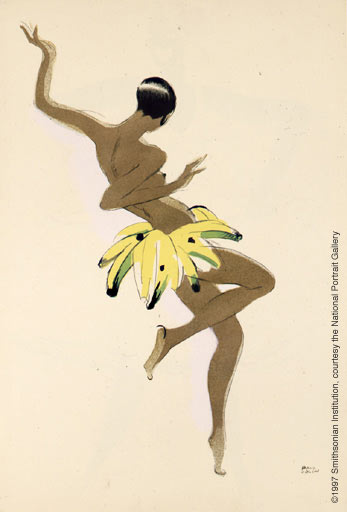
Josephine Baker, the author of Negrophilia played with stereotype in her association with Paul Collin who did sketches for the French magazine "Negre" he sketched Josephine baker accentuating her physical features and using prejudice that people have.


The Harlem Renaissance was also a big artistic revolution for black artist and the Jazz was its big star, being a avant-garde way of dealing with Music, very ingenious.


Here are some other artist that participated to this "breaking the European art" movement:
Nancy Cunard, who was the heiress of the Cunard Line shipping businesses, in 1928 she married Henry Crowder and Afro-American Jazz musician, she wanted to be part of the African culture and fought against racism.


Aaron Douglas, a painter who is closely linked to the Harlem Renaissance by his painting, a very explicit work is The Crisis


James Van der Zee, a photographer in Harlem he photographer Jean Michel Basquiat

Kieth Piper, an artist from the West-Indies, whose picture of the world hold by black hands express his reality,
I particularly like it because it is very explicit about our own personal representation of the world and the colonialist and "superior" attitude a lot of Westerner adopt.
Sonia Boyce, a British Afro-Caribbean artist with her work "we are English"
Yinka Shonibare 1962, African textiles
What I will remember from this lecture and the previous one is that art is closely linked with identity, and that the artist that are using their identity in their work always end up with a very touching sometime shocking outcome which provoke a reflexion to the viewer.

Friday, 12 February 2010

"He was a genius. What a tragic waste"

I don't know which words to use to explain how I felt, I said it was like when Michael Jackson died but in worse, it gave me goosebumps. I wasn't expecting Alexander McQueen to die that early, he was only 40... I felt sad thinking of how sad he could have been to want to put a final stop to his life.
I loved the risk he took in every collection he created, a genius that is who he was.
I believe that in order to compensate the genius, life or God, in its fairness or unfairness, has given the doted a weakness... It is tough but we have to keep going..
I will not forget that day, A final, tragic, twist in the tale of a fashion giant.
...

Friday, 5 February 2010

Postmodernism, as I researched and understood it...


I have been reading POSTMODERNIST CULTURE, An introduction to theories of the contemporary by Steven Connor to help understand more this movement and especially how it influenced art.
I want to quote parts of the text I have read and then "debrief" it...

" we might say that the characteristics of postmodernism is this peculiarly complex relationship which it has to modernism which in its very name it has once invoked, admired, suspected or rejected."
For me this means that postmodernism and modernism are in many ways closely linked.

ARCHITECTURE:
MODERNISM: Bauhaus Walter Gropius, Henri Le Corbusier, Mies van der Rohe.

" From now on, architecture was to belong to and express the new. It was to use new materials and embrace the techniques of construction which industrial development had made available, The newness of the modern movement would lie principally in forms of reduction, simplification and concentration."
NEW and SIMPLIFICATION

"Its beauty was now longer to be incidental or supplementary to its function, for its beauty would now be its function."
Introduction of beauty not only as a "plus" but has the aspects of modernism constructions.

"At the same time, architecture was to be the visible expression of a new unity of art, science and industry."

Architecture was the first and most obvious example of the modernist movement.


" Jencks focuses first of all on what he calls the uni valence
of modern architecture. (...) the simple, essential forms (...)usually, this is achieved by the device of repetition, (...) in their approximation of geometrical perfection (...)which does not refer to anything outside itself by quotation or allusion.


Uni valence: the quality of being univalent:

Genetics. (of a chromosome) single; unpaired; not possessing or joining its homologous chromosome in synapsis.)http://dictionary.reference.com/browse/Univalent?o=100074

To me this means that modernism is about simplicity to a extend that it doesn't even link to the "world context".


"The first and most obvious of these is through a return to the sense of the meaningful or referential function of architecture."

Not much connection with the current context but more about a message through architecture.


ART:
MODERNISM: Kandinsky,Klee, Mondrian, Clive Bell (critic), Kant (philosopher)

"What holds modernism together in art is a programme or ideology, rather than a particular, identifiable form of practice; correspondingly, what underline debate about postmodernism is a shift in this programme. This is to say that even more than in architecture,artistic modernism is defined at some point between practice and theory, between artistic objects and their definitions. The postmodernism debate makes this interrelationship even more complex."

Modernism art is about its significance, postmodernism is a following of it adding more to its definition.


Greenberg believes, that because Kant was the first philosopher thoroughly to scrutinize the nature and limitations of reason itself , he is the first real modernist.


"For Greenberg, the undeniable dominance of painting in modernism is due to the achievement of this absolute self-possession and self government, and it's painting's absolute dependence upon its own medium."

SELF SELF and SELF : self criticism, scrutinize, self possession, self-government...

I believe the modernism movement was not about matching in the context anymore but about individuals and the own development of each techniques independently and maybe even about each countries evolving independently...


"Greenberg's attempt, then, is to affirm the uni valence of painting, as Le Corbusier wanted to affirm the essential identity of architecture."


"It might be said that Cavell has run into a certain crucial switch point in the division of modernism from postmodernism in the visual arts, a point at which modernism's intensity of self-definition flips over into a radical uncertainty about art's very means and identity."

Where it changed from modernism to postmodernism, that is when the self when too far too a point that there weren't any more identity in art.


The theory of postmodernism can be separated in two by two Critical groups; the conservative-pluralist "Charles Jencks has identified himself as the central figure of conservative-pluralist theories of artistic postmodernism." and the critical-pluralist which is represented by writers from the journal October.

"Where Jencks imagines a simple break between the restriction of modernist 'absorption' and the openness of post modernist 'theatrically', the October group seek to understand the complex relationships between the terms of the binary opposition."
difference between the two post modernist analysis group.

"One of the signs of this openness to that which lies beyond the self-absorbed work, is the unabashed return to representation, symbolism, connotation, and all the other forms of referentiality."

One of the characteristic of post modernism is this come back to the arts referring to a context.

"..forms of artistic post modernism have all been money spinners, and whose central purpose, in recent years, seems to have been to reconstitute art in the way that Jencks so openly acknowledges, as 'the image of the bourgeoisie triumphant and enjoying itself'"
Post modernism is again the comeback of what art was before the modernism movement.

The structure of oppositions which frames the post modernist analysis of the two groups * therefore has much in common, in setting multi valence against uni valence, impurity against purity, and inter-textuality against singleness of the work."

* conservative-pluralist( Jencks) and critical-pluralist (October) .
This part of the text explain clearly what is the difference between modernism and post modernism.

"This complex passage argues that the non representational sign of the modernist painting always represents something, if only the desire to embody non representation."
Interesting point about modernism and in life generally, even if you are against all kind of "group" then you will be grouped as a non-group.

PHOTOGRAPHY:
" As the quintessentially art, modern art, photography has been one of the most threatening adversaries to the integrity of paintings in the twentieth century.Indeed, one may say that it was partly in reaction to the widespread dissemination of photographic technology that modern painting was forced to turn from representation into the abstract interrogation of its own form of conditions."

The role and evolution of photography in these movements(modernism and post modernism), as I understand it art- photography too the self absorption the modernists had.


I am happy I could read this chapter and understand some of it, it was a challenge for me!

What I will remember from it is that Modernism and Post modernism are closely linked and could not exist independently, I will remember the self of modernism and the back to referential values of the post modernism, I have learnt about architecture and influential names linked to modernist art and post modernist art.


Friday, 29 January 2010

Lecture by Emma Neuberg


http://www.emmaneuberg.blogspot.com/

During that lecture Emma Neuberg was talking about modernism and semiotics ( untold signs and messages)
20Th-21Th textile print, the geometric patterns, graphic line and super flat colours, and the cultural and technological context of that era.

PICTURE

When Freud appeared and the Darwin evolution theory emerged God disappeared from the front scene , the worlds entered a post world environment where the body is part of the design, it was a process of re-socialism through dress. spots, triangle, stripes were part of the the fashion designs of the moment.
The movement was non-bourgeois , there were no place for romance, femininity, arabesque, divine, ornate or gilded ; modernism was a world of speed, graphic line and bold colour. It was the man machine integration


Soviet textiles industry: men at their machines, planes and uniforms, very propaganda like.


This mentality was very urban and was somehow linked with capitalism and communism. Sonia Delaunay painting

"Techno motifs" appeared using wave and electricity in art
Sonia Delaunay is the first artist to have identified electricity as a technological motif for high fashion, her art work inspired then the modernists motifs in the 60's.


Hans Schwipperts designed building, post war

The pan European architecture of the modernist was round up by the Nazis during WW2, many of Bauhaus modernist designs were Jewish, but their influence persisted post war, one good example is Hans Schwipperts work.


Michele Rosier Dress 1960's

At that time fine artists pushed the boundaries; Bridget Riley work and prints inspired the Mod's movement. Ben Shermann also became an important name with his checked shirts that became an symbols for the Mods and later the Skin heads.


Some other designers linked to the modernist movement were Pierre Cardin, Mary Quant and Michele Rosier.

Plastic, short and bright and bold were very present in the modernist fashion.
There were new form, new shapes and stretch, it meant new ideologies, more freedom.

The women fitted very well into this change, they became the body to represent and assimilate the cultural changes.


The semiotics of that period was obvious, no one talked about the change but it was there to be seen. Michele rosier design presented in ELLE gave subtle messages to the reader: Control/ Machine/ City Life


Photo

magasine cover 1960's


This whole idea was present during modernism, it was structuralist, binary: black/white, heaven/hell, now/never... and that could be seen through fashion.


The check board and black and white, bold colours and geometric shapes are timeless.
Lacoste Sportswear fall 08 presented at Mercedes fashion week.
I found this lecture really great, I love to learn about eras of history that are still very much influencing us, from this lecture I got my idea to use the mini skirt by Mary Quant as my Object analysis.
Some books and texts related to the subject:
  • Stern,R. Against Fashion, 1850-1930, 2005
Weltge-Wortmann,S. Bauhaus textiles: women artists and the weaving workshop, 1998
Troy, V. The modernist textile: Europe and America, 1890-1940, 2006

Decode - Digital Design Sensation


DECODE was interesting and fun.
The first part which was more design on screen was good to look at but the second and third part which was more interactive were sensational and was a great update to what you can currently do digitally and with technology ( I am not sure though what it has to do with digital textile design) .
The entrance path through long "ET fingers" was really cool; in the CODE part I really liked the black and red design that expended ( Lia Arcs 21?) it made thing of blood but in a fascinated way.
My two other favourite one from the INTERACTIVITY and NETWORK part of the exhibition was the clock(Ryoji Ikeda data.scan?), i loved the patchwork effects it has.. and like the idea behind it and the fact that you can go and post your own photo on a website.
The video grid by Ross Phillips was the other one that I spent time looking and participating, the outcome is very funny and I enjoyed myself.


Overall I liked the entertaining side of digital design, I felt like everything can be done using digital devices!

RAC "work in progress" exhibition

I found the work of the MA student innovative, unique and personal and flawlessly presented. I took a business card of the one I really enjoyed...
LIST still to come

I realised , by visiting the exhibition, that I am really interested in the print work, I really like the graphic features of the print work presented there. I also found it interesting the final outcome as it wasn't always fashion focused. a part from the print work I really like the knit work!!

It was good to see their work and it really encourage me to keep going and make the best of my BA.

"Neighbourhood Colour" Exhibition

From what I have seen looking at the work exposed in the exhibition, the students had to look at two areas of London , most of the time different in style and atmosphere, they had to look at their colours.

The work I really liked and found perspiration, in general I was attracted by knit and print work and I found that their final outcome was something I would like doing.
I like the knitted top, knitted in fine grayish yarn, the girl( I don't remember her name but she is so nice!)printed on top of her knit with puff binder and devore, both had a terrific effects on the outfit.
I really liked the combination of print and knit and it showed me that textile design stays open minded at Chelsea.
The second one that I loved is the printed fabric with many different cups and digital printed toasts and the "cat rug", I found it very entertaining and enjoyable to look at, it is very actual and funny!

Amongst other I like the knitted garments in many colourful yarns, it was cool to see some technique she used that I had just learned. it was really standing out.
I liked a lot of the stitch work but mainly I liked seeing a concrete example of what can be done in stitch.

In terms of personal research, I was amazed by the hair drawings a girl did, they looked so real! and I liked her material adaptation which was very explicit.

I was happily surprised by the variety of presentation and that motivated me.

Asking about sustainability to the girl whose print were amazing, I was disappointed to realise that it didn't seem to be a strong value in her work and that with all the chemicals used for screen print, it didn't matter.

Globally I enjoyed looking at every one's work, it helped me a lot toward my specialisation decision.